
Keyword research for every community, city, and home type you sell, plus a look at who ranks and who AI names today.
SEO for Homebuilders That Brings In Buyers
SEO for homebuilders that gets your communities, floor plans, and available homes found on Google, in Google Maps, and in AI answers like ChatGPT. We build the pages, profiles, and search strategy that turn buyer research into sales.
Book a CallHomebuilder SEO Built
Around How Buyers Shop.
For production builders, custom builders, and developers. Every plan starts with your communities, your homes, and the questions your buyers ask.
A Buyer Is Comparing New Homes.
Google Search
Google Maps
AI Answers
Your Website
Community & Plan Hubs
Connected to every home you sell
Communities
Floor Plans
Quick Move-Ins
Useful content · Clear structure · Credible sources
A Sales InquiryA visit or a call with your team
Explore a Service to See Its Role.
A page for each community, floor plan, and quick move-in home, written so buyers can compare without calling first.
Fast, crawlable pages, clean inventory updates, and structured data so Google and AI tools read your homes correctly.
Reviews, listings, links, and mentions that agree with your website, with reporting on traffic, AI visibility, and sales inquiries.
Book a Free 30-Minute Call
Pick a time that suits you. Jacob reviews your current website before the call, so you leave with clear next steps. Search and AI visibility starts from $2,500 a month, with a six-month minimum, and your website build or rebuild is included.
Your Call Is Booked
A quick note from Jacob before we meet.
Meeting Details
- What
- Formbreak Intro Call
- When
- See your confirmation email for the date and time.
- With
- Jacob Peistrup
Your confirmation email includes your calendar invitation, meeting link, and options to reschedule or cancel.
Prefer to start in writing? Send us a message.
AI SEO for Homebuilders: Why AI Names One Builder and Skips Another
AI tools recommend the builders the most sources agree on. When a buyer asks ChatGPT or Google AI Mode for builders in a city, the AI tool looks for consensus across your website, your reviews, portals like Zillow and NewHomeSource, best-of lists, and local press.
The biggest myth about AI search is that one hack fixes it. What works is coverage: a page for every community and plan, profiles that match your website, and reviews that tell the same story.
60%
of the sources AI tools cited were builders’ own websites when we asked about hiring a custom builder.
Our November 2026 test: 20 questions asked in ChatGPT, Google AI Mode, Perplexity, Gemini, and Claude, with all 100 answers returned. Four ChatGPT answers were captured from the ChatGPT website after repeated API timeouts.
Three Checks You Can Run This Week
- 1
Ask AI What Your Buyers Ask
Type the questions a buyer would ask, such as the best builders in your city or new homes near a school district. Is your company named, and is what it says accurate?
- 2
Audit Your Brand Consistency
Compare your website, Google Business Profiles, Zillow and NewHomeSource listings, and social profiles. Names, communities, prices, and phone numbers should match everywhere.
- 3
Give Every Page One Job
Each page should cover one community, plan, or service in one place, so it is clear who the page is for and what to do next.
Production and Custom Builders Need Different SEO
Production builders sell communities, plans, and available homes at scale. Custom builders sell trust over a long decision. Your plan follows how you sell.
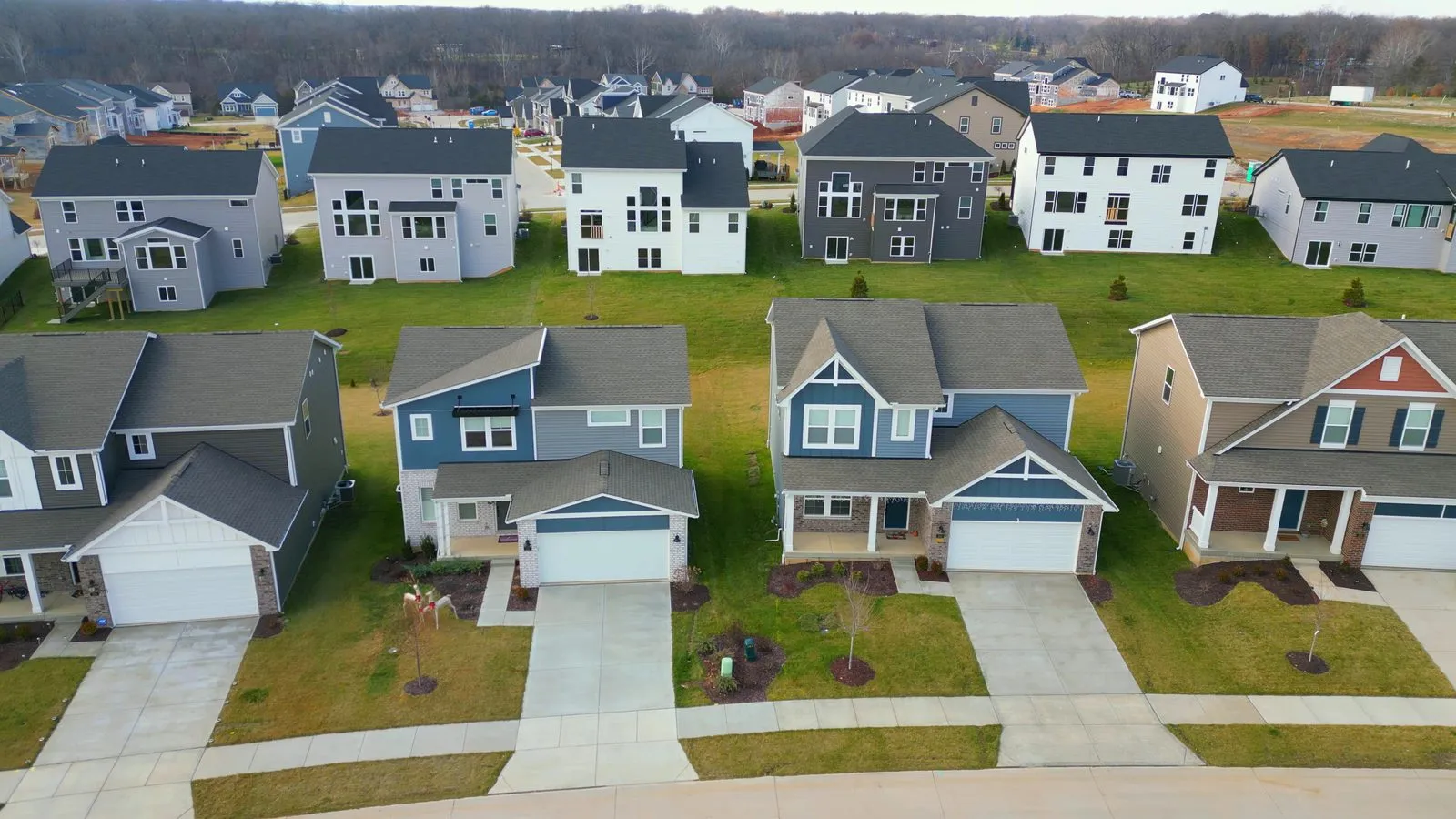 Production BuildersCommunities, plans, and available homes at scale | 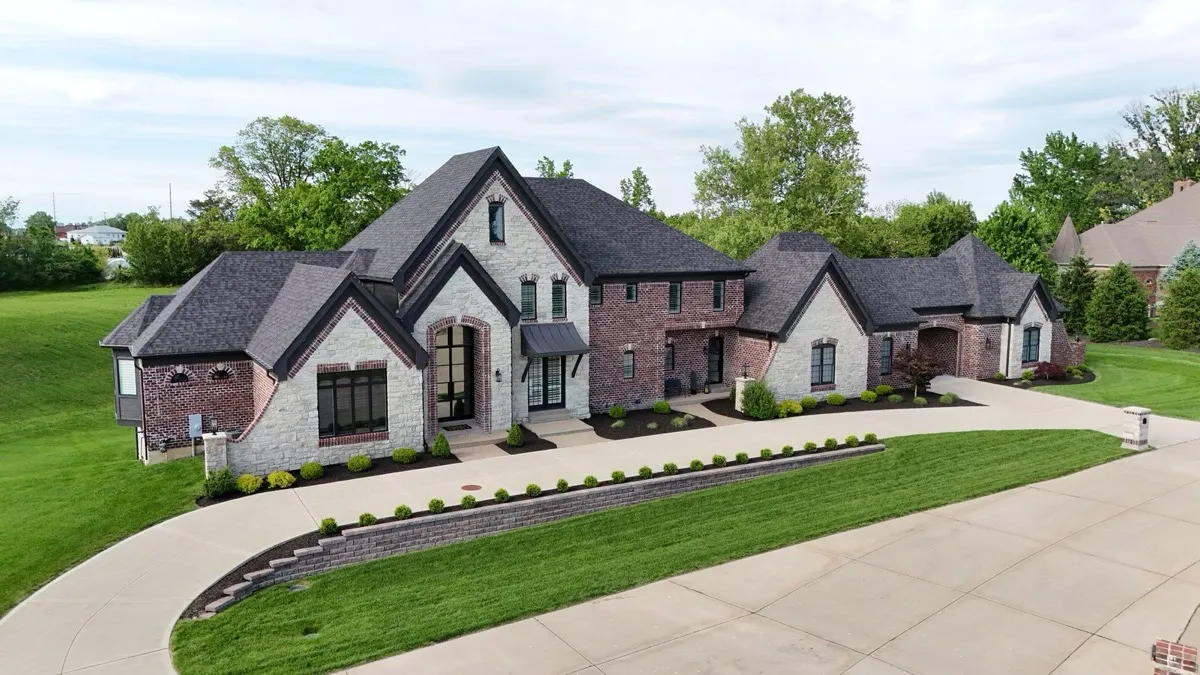 Custom BuildersTrust, portfolio, and process over a long decision | |
|---|---|---|
| 1What Buyers Search | ProductionNew homes in a city, a community name, quick move-in homes, a floor plan | CustomCustom homebuilders near a city, build on your lot, luxury builders, a builder’s name |
| 2Pages That Win | ProductionCommunity pages, floor plan pages, and quick move-in pages with prices and dates | CustomPortfolio and project pages, a building process page, and service area pages |
| 3The Hard Part | ProductionMany communities sharing the same plans without duplicate content | CustomFew pages, long decisions, and buyers vetting your reputation for months |
| 4What AI Looks For | ProductionConsistent community facts, available homes, and reviews across sites | CustomYour own website, completed work, and reviews that tell the same story |
Only need a new website? See our homebuilder web design packages.
New Construction Websites We’ve Built
Community sites, building guides, and new construction pages. Every site here is live. Tap any site to see it larger.
What This System Did for One Real Estate Team
$65M+
in home sales since 2021 closed and under contract from our marketing system for Gateway Realty Group.
Read the Case Study- 112 closed home sales tracked since 2021
- 95K monthly organic search impressions
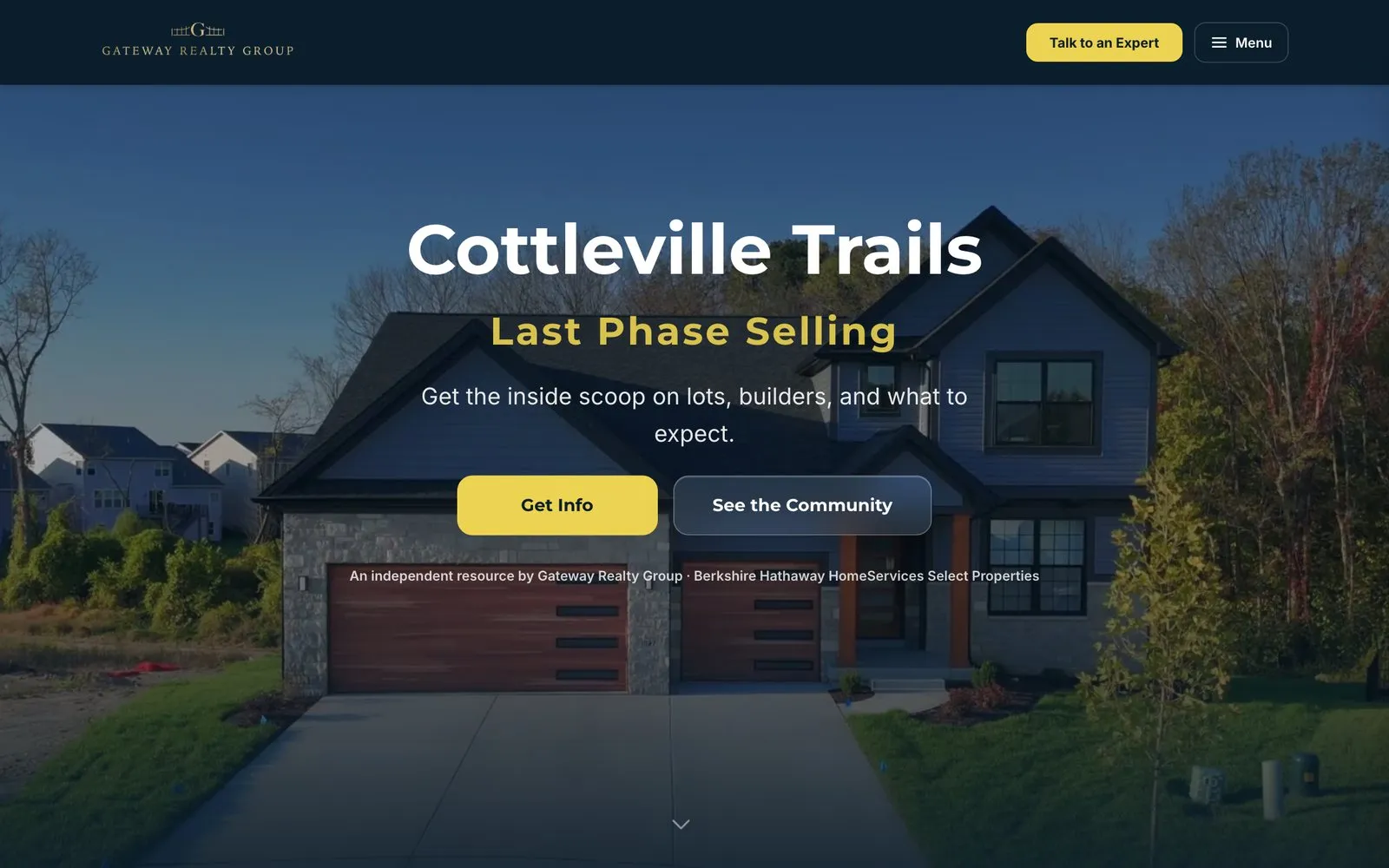
Cottleville Trails
A new construction community site with floor plans, available homes, and buyer inquiries.
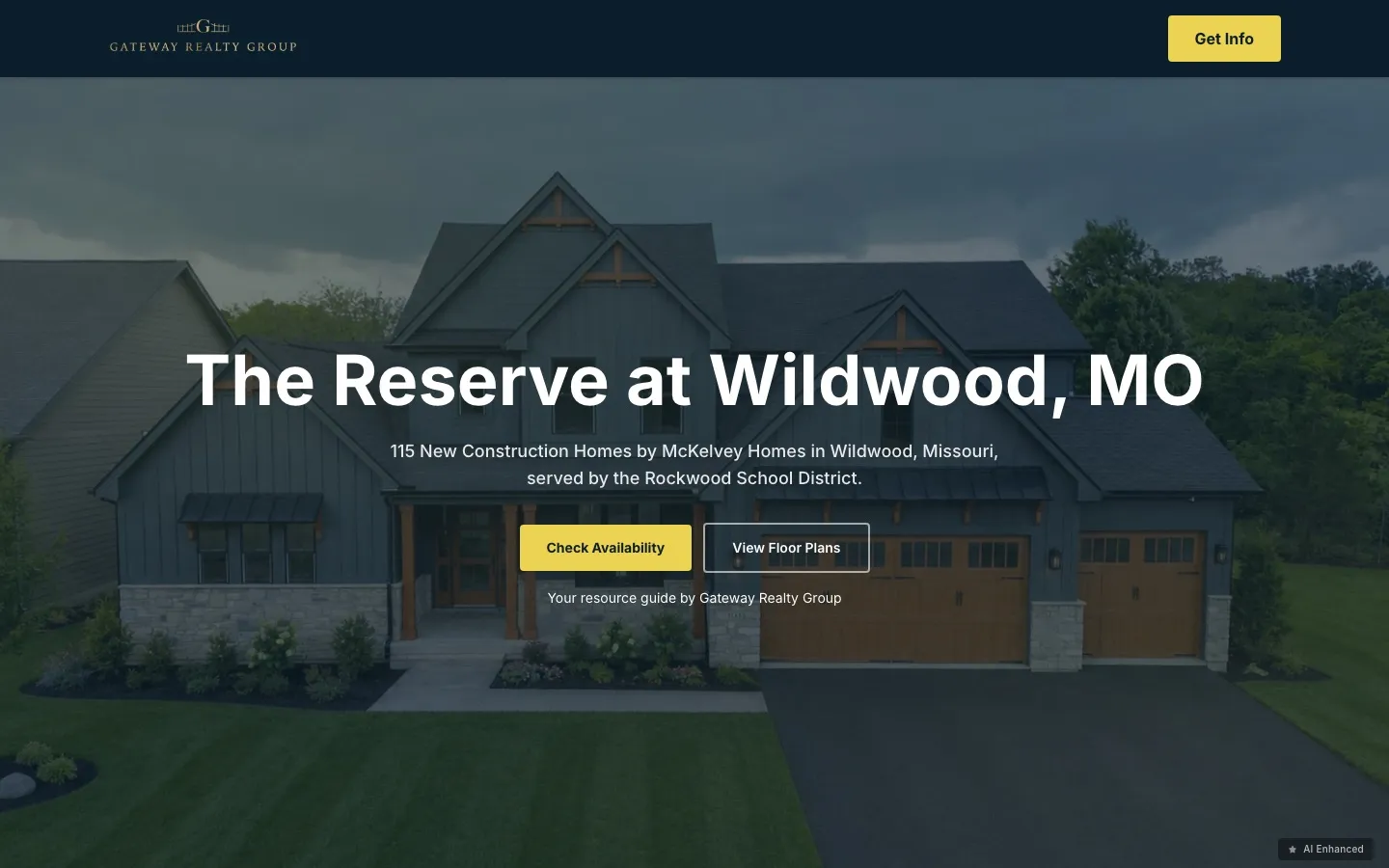
The Reserve at Wildwood
A lead site for a 115-home new construction community in Wildwood, Missouri.
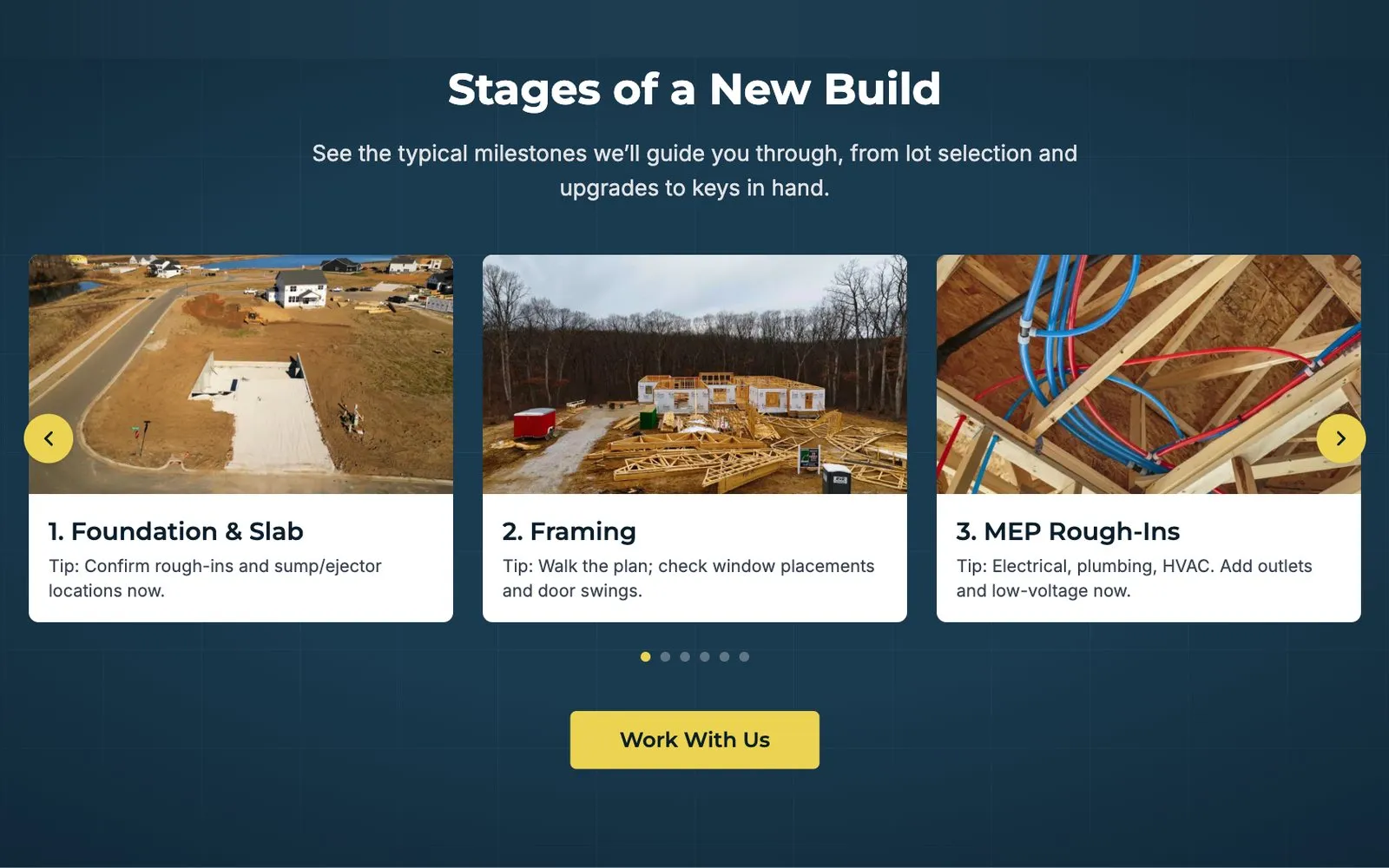
Stages of a New Build
A section of the Gateway Realty Group building guide that walks buyers through each stage, with a tip for every one.
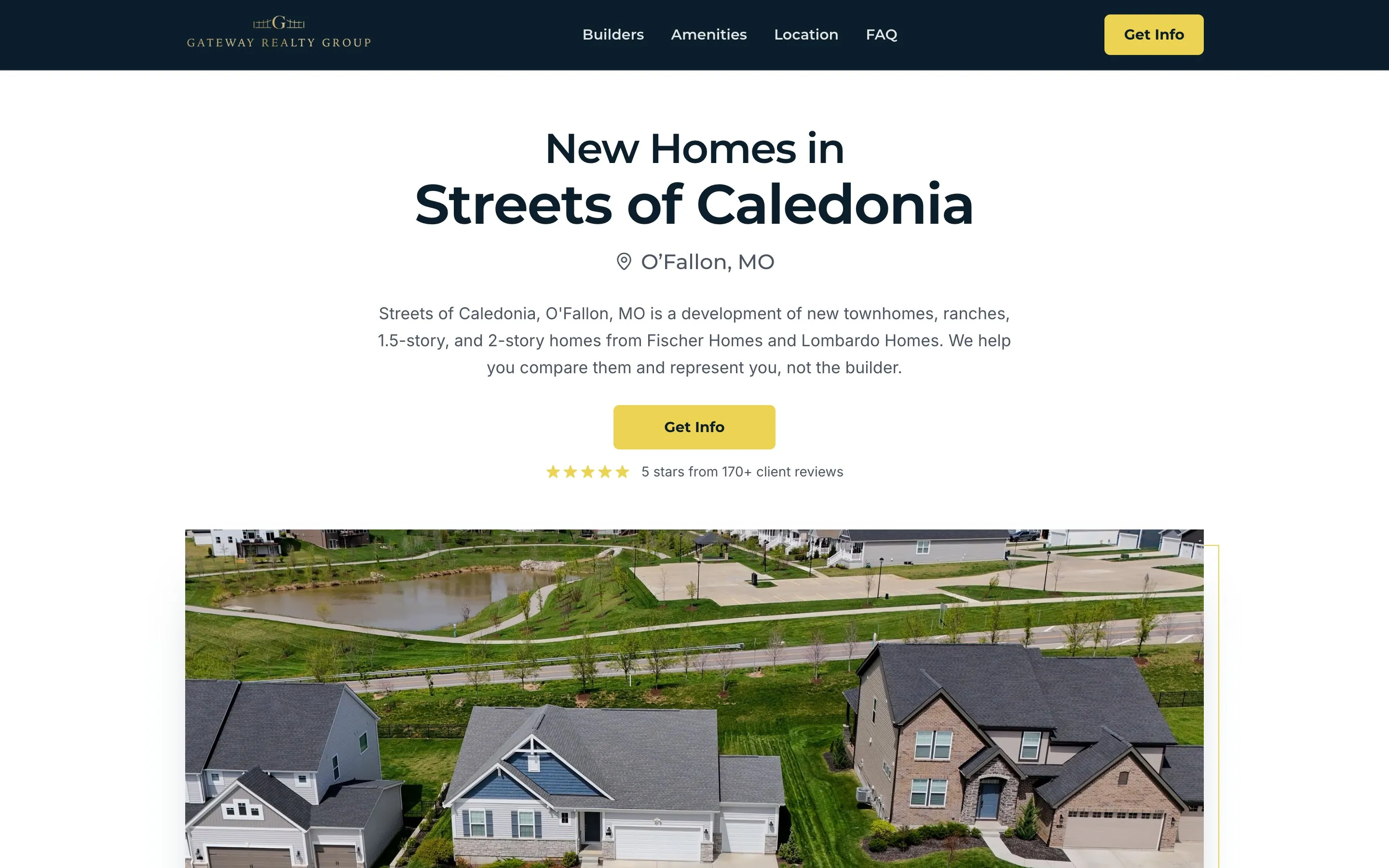
Streets of Caledonia
One page for a 650-home community in O’Fallon, Missouri, producing buyer leads for years.
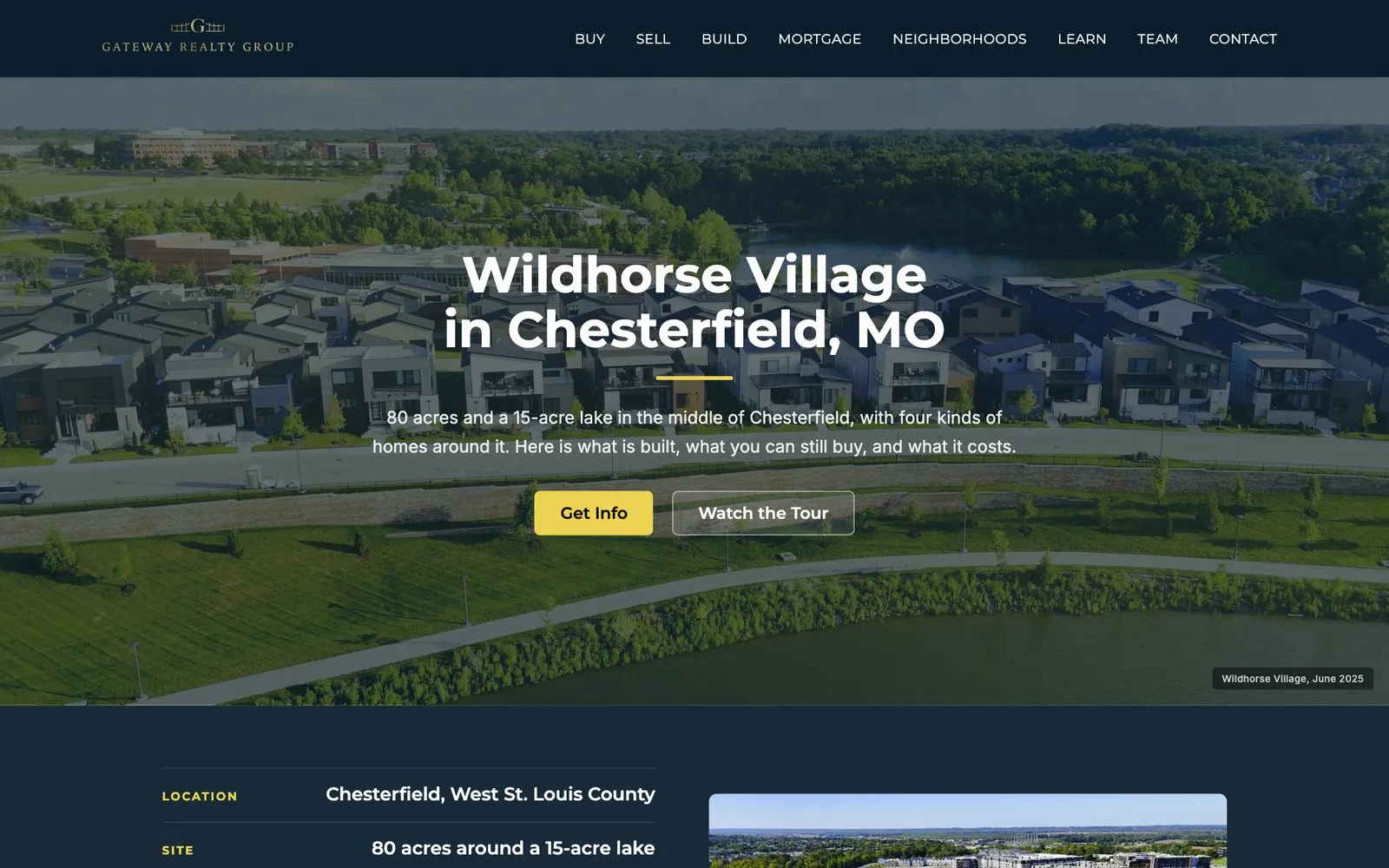
Wildhorse Village
A community guide covering what is built, what buyers can still buy, and what it costs.
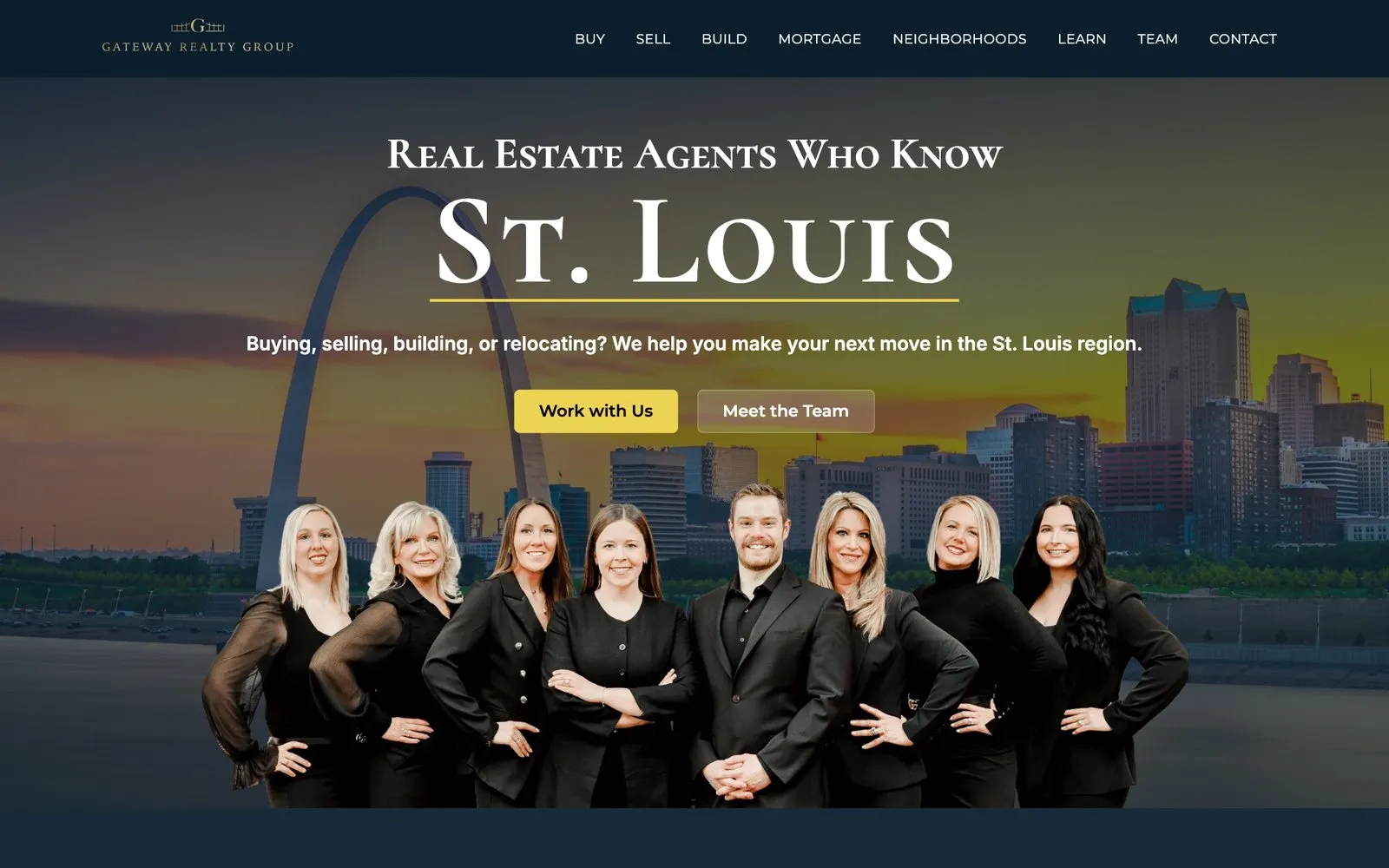
Gateway Realty Group
The flagship site for the St. Louis real estate team behind the Living St. Louis channel, with new construction and community guides.
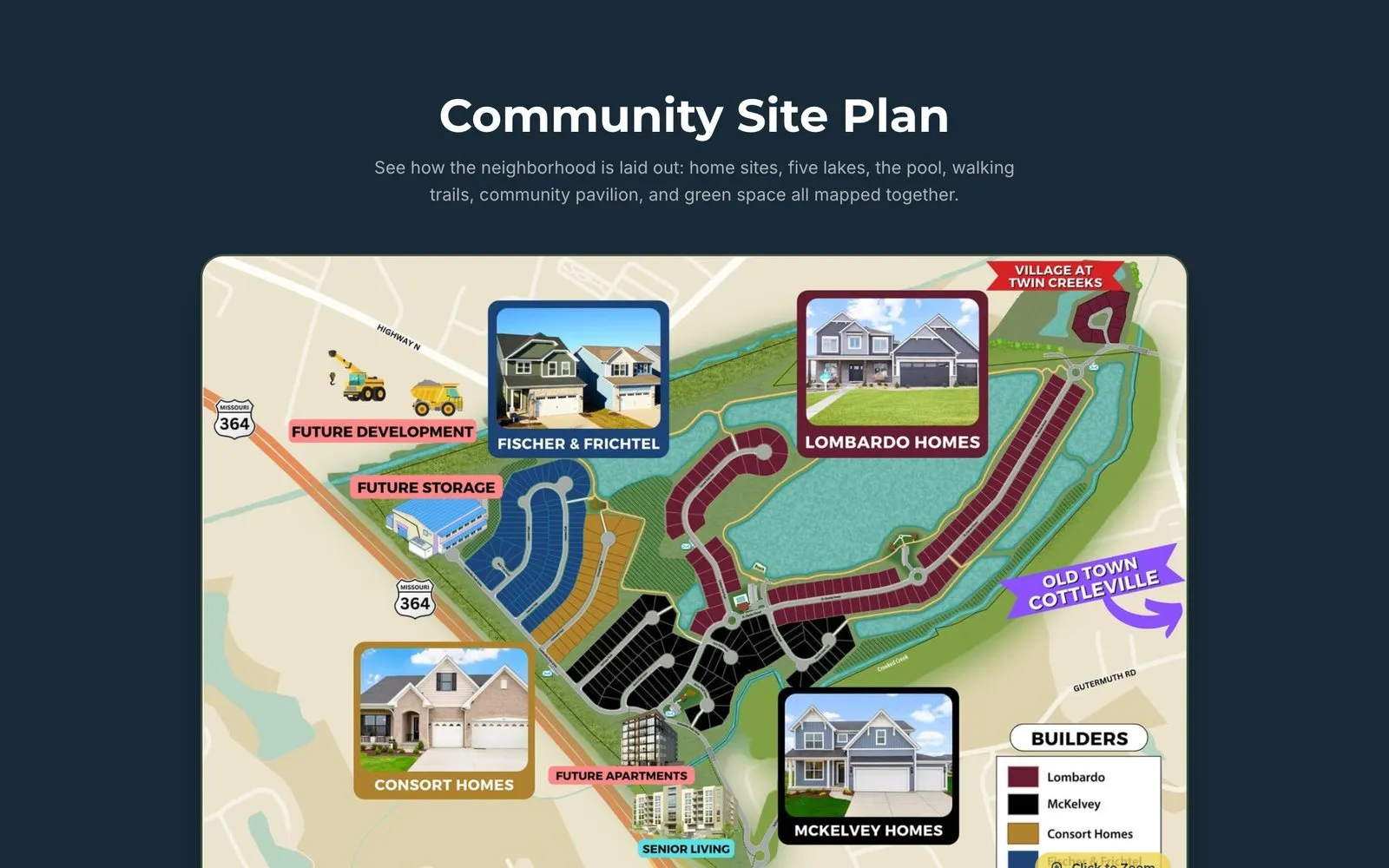
Cottleville Trails Site Plan
An illustrated site plan that shows every builder, lake, trail, and future development in one map.
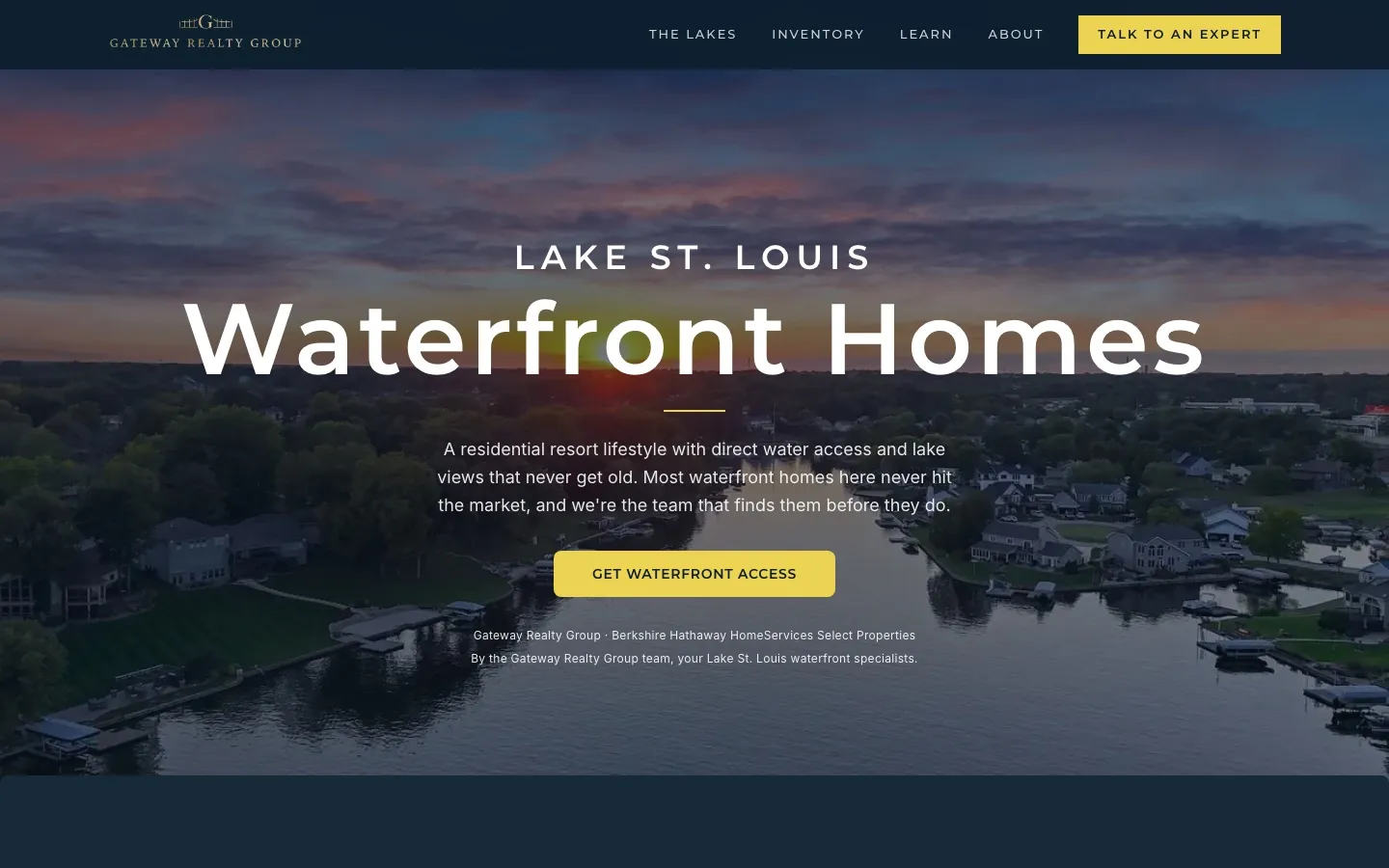
Lake St. Louis Waterfront Homes
Waterfront home guides and property information for Lake St. Louis.
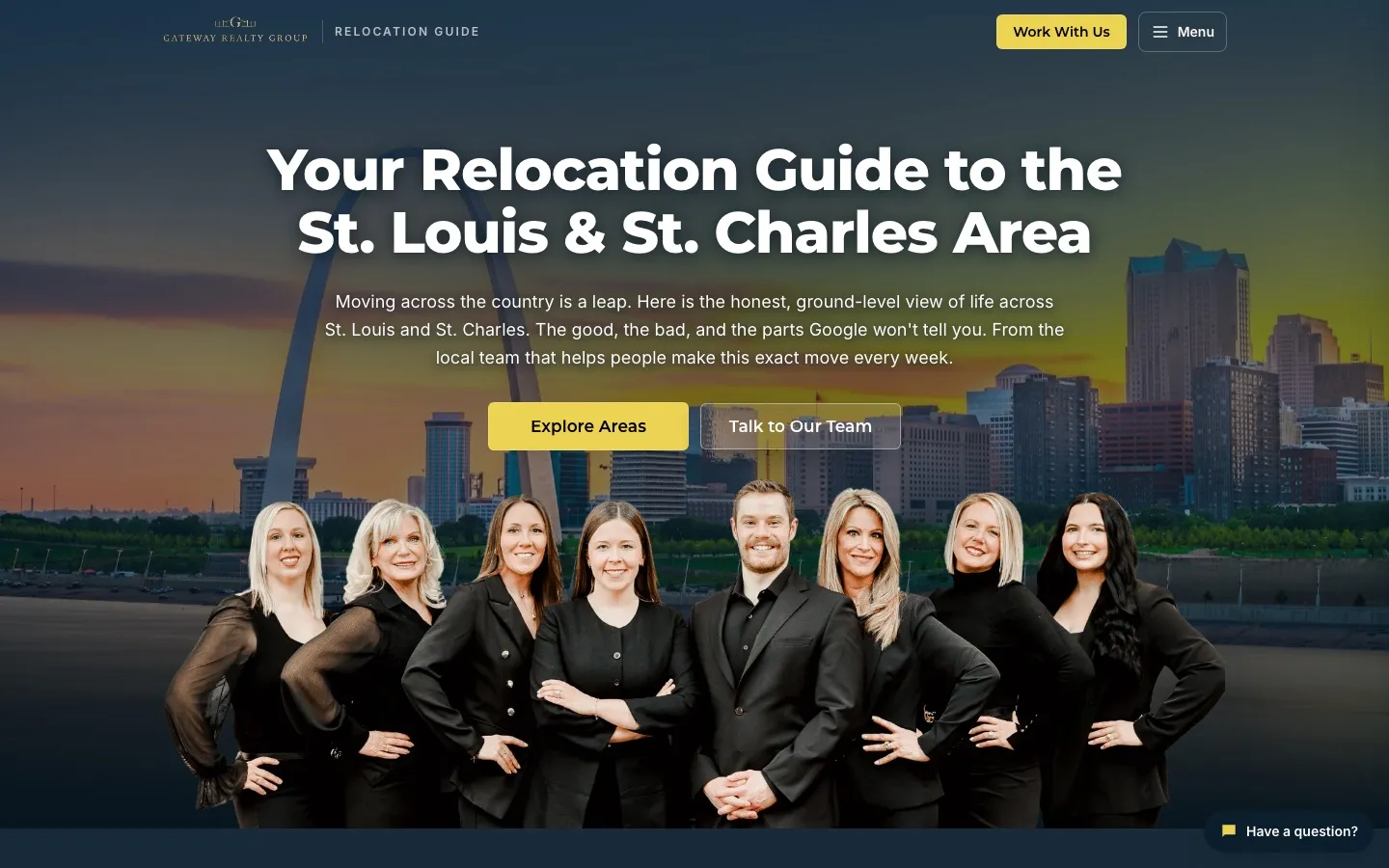
St. Louis Relocation Guide
An interactive St. Louis relocation guide that replaced a 26-page PDF.
What Your Homebuilder SEO Engagement Delivers
Every stage produces something you can see, review, and use.
- 1Plan
Research Your Communities
We study your website, competing builders, community searches, and today’s AI answers to find the pages worth winning first.
- A prioritized search plan
- Community and competitor research
- A baseline of rankings and AI answers
What That Includes
- Bottom-of-funnel keyword research: new homes in each city, community names, floor plans, and quick move-in homes.
- Search Console data and real buyer questions over volume estimates.
- Competitive analysis of the builders, portals, and listicles that rank and get cited.
- A benchmark of rankings, AI prompts, and sales inquiries before work begins.
- 2Build
Build the Foundation
The first months fix your website and profiles: the homes, the communities, and the Google Business Profiles every page depends on.
- Your website, improved or rebuilt
- Google Business Profiles for sales offices
- Technical SEO and lead tracking
What That Includes
- A Google Business Profile for each eligible sales office, plus a review system.
- Technical SEO: crawlable HTML, title tags, meta descriptions, canonical tags, XML sitemap, schema markup, and page speed.
- Inventory pages that update cleanly when a home sells, without broken links or duplicate floor plans.
- 301 redirects when needed. Forms, calls, and appointments tracked in your CRM.
- 3Grow
Publish Pages That Help
Your communities, plans, and process become the pages buyers use to compare builders and book a visit.
- Community and floor plan pages
- Buyer guides built from real questions
- Internal links that connect them
What That Includes
- Community and city pages first, then floor plans, available homes, and buyer guides.
- Content on lot premiums, incentives, the building process, and what is included, because buyers ask about it.
- Original photos, dated prices, and firsthand detail AI cannot easily copy.
- Fair housing compliant copy with internal links to the pages that convert.
- 4Measure
Earn Authority
Reviews, listings, links, and mentions build agreement around your name, and monthly reports show which work turns into sales inquiries.
- Relevant mentions and links
- Search, AI answer, and inquiry reporting
- Agreed next priorities
What That Includes
- Authority from your market: your Home Builders Association, Parade of Homes, local media, trade partners, and new home portals.
- Data and guides people want to cite, plus quality links, never low-quality purchased links or private blog networks.
- Monthly reporting on keyword footprint, organic traffic, conversions, and Google Business Profile actions.
- AI visibility in ChatGPT, Gemini, Claude, Perplexity, and Google AI Overviews, judged against qualified leads.
Timing. The first months focus on your website and foundations. Content, authority, and AI visibility work builds from there, usually 2 to 4 months after kickoff depending on build scope. We agree on the sequence before work begins.
Your Website and Search Strategy.
One Engagement.
Your visibility depends on what buyers find after the click. We connect homebuilder SEO, your website, and lead capture so each part supports the next.
- Production BuildersCommunities, floor plans, and quick move-in homes.
- Custom BuildersYour portfolio, your process, and the areas you build in.
- Developers & CommunitiesThe place, the plan, and a clear path to inquire.
Search & AI Visibility
From $2,500a month
Six-month minimum. Website build or rebuild included, with no separate build fee.
- Community research and a prioritized search plan
- Website, technical SEO, and conversion foundations
- Community, floor plan, and inventory pages
- Search, AI visibility, and inquiry reporting
- You own your website, domain, and content
A Practical Guide to Homebuilder SEO
What moves builder rankings, AI answers, and sales inquiries, in plain language. Open any topic for the details.
Homebuilder Keyword Research
Find the searches that lead to a model home visit.- Start with high-intent, location-based keywords: new homes in a city, community names, quick move-in and spec homes, and floor plans.
- Custom builders add build on your lot, luxury, and custom homebuilder searches for each area they serve.
- Local volume estimates are unreliable, so Search Console and real buyer questions guide the plan.
- Each page targets one search intent: one community, one plan, or one service area.
- Long-tail keywords show who is searching, such as move-up buyers, downsizers, and relocation buyers comparing areas.
- Builders in several metros pair national SEO for the brand with local SEO for each market and community.
Community Pages That Rank
Make each community the best answer about itself.- Builders, floor plans, available homes, price ranges, typical lot sizes, HOA fees, and school districts on one page.
- A master plan or lot map with lot status, original photos, and what is built, under construction, or still to come.
- Nearby amenities, commutes, and the questions buyers ask before they visit.
- A clear path to book a model tour, visit the sales center, or ask about a specific home.
Floor Plans Without Duplicate Content
Show the same plan in many communities without competing with yourself.- One main page per floor plan, with community availability and pricing shown on it.
- Canonical tags when a plan must appear in several community sections.
- Unique copy for elevations, options, and the lots where a plan fits.
- Real floor plan images with room names and dimensions, plus alt text.
Quick Move-In and Inventory Pages
Keep available homes findable as inventory changes.- A stable page for each community’s available homes, with individual homes linked from it.
- Sold homes redirect or point to similar available homes instead of returning errors.
- Move-in dates, prices, and incentives kept current and dated.
- An XML sitemap that updates when homes are added or sold.
Technical SEO for Builder Websites
Make every community and plan page easy to crawl, load, and understand.- Site architecture that runs from markets to communities, plans, and available homes, with internal linking between them.
- Core Web Vitals and mobile-friendly design, because many buyers browse homes on a phone.
- Image optimization for large photo galleries: compressed images, descriptive file names, and alt text.
- LocalBusiness and HomeAndConstructionBusiness schema, plus FAQ and breadcrumb markup where it fits.
- Search Console and URL Inspection to confirm new pages are indexed, and noindex only on pages that should stay out of search.
Google Business Profile for Builders
Show up in Maps when buyers look for builders nearby.- A profile for each staffed sales office, because Google does not allow profiles for model homes themselves.
- The right primary category, real photos, and steady reviews from buyers.
- Google ranks local results by relevance, distance, and prominence.
- In our St. Louis study, Google Business Profiles were the largest source Google AI Mode cited, more than half of its citations.
Local Visibility Beyond Google
Be listed the same way everywhere buyers and AI tools look.- The Google map pack first, then Bing Places, Apple Business Connect, Yelp, and the BBB.
- The same business name, address, and phone number on every listing, matching your website.
- Each sales office listed with its own photos and details, and the areas you build in described as a service area.
- Directory and portal descriptions that match your website, because AI tools compare them.
SEO for Custom and Luxury Builders
Earn trust before the first meeting.- Project galleries with original photography, virtual tours, finishes, architectural styles, and the story of each build.
- A building process page that explains design or design-build, renderings, pricing, selections, and the timeline.
- Service area pages only where you build, each with real projects from that area.
- A build-on-your-lot page for buyers who already own land, plus a cost-to-build guide that answers the price question early.
Reviews and Reputation for Builders
Give buyers and AI tools the same story.- Steady Google reviews from closed buyers, answered by your team.
- Reviews on the sites your buyers check, such as Houzz, the Better Business Bureau (BBB), and new home portals.
- Client testimonials on your own pages, with the buyer’s permission, next to the homes they describe.
- Never fake, incentivized, or staff-written reviews.
- Your website, profiles, and reviews describe your homes, warranty, and process the same way.
AI Search, AEO, and GEO for Builders
Give AI tools accurate facts they can repeat about you.- Answer engine optimization (AEO) and generative engine optimization (GEO) build on SEO; they do not replace it.
- ChatGPT, Gemini, Claude, Perplexity, Microsoft Copilot, and Google AI Overviews look for agreement across your website, reviews, portals, and press.
- Specific pages win specific questions: in our St. Louis study, 86 of 143 business website citations on narrow questions went to pages other than the homepage.
- No tool can tell you true ChatGPT prompt volume, so we track a fixed set of buyer prompts over time.
Authority for Homebuilders
Earn mentions from sites your buyers already trust.- Your Home Builders Association (HBA), Parade of Homes awards, your chamber of commerce, local media, and trade partners first.
- New home portals such as Zillow New Construction and NewHomeSource, kept consistent with your site.
- Data and guides people want to cite, such as incentive roundups or a building cost guide.
- A backlink profile built on quality over quantity, with natural anchor text, and never private blog networks.
Content That Builds Topical Authority
Answer the questions buyers ask before they call.- A pillar page for each big topic, such as building a home or buying new construction, with topic clusters linked from it.
- Blog posts and guides that answer long-tail buyer questions about lots, incentives, timelines, and costs.
- Buyer tools and lead magnets, such as a cost-to-build guide or a lot checklist, that earn email sign-ups.
- Video content and YouTube walkthroughs of communities and model homes, embedded on the pages they support.
Measuring Homebuilder SEO
Track sales inquiries, not just rankings.- Benchmark rankings, AI visibility, and inquiries before changing anything.
- Report keyword footprint, organic traffic, impressions, clicks, and click-through rate.
- Track GA4 key events: appointment requests, floor plan views, calls, and form submissions.
- Connect inquiries to your CRM so you can see which pages bring buyers who close.
What Homebuilder SEO Costs
Know what you are paying for before you sign.- Most builder SEO is a monthly retainer with a minimum term.
- Published agency ranges run from about $1,500 to $15,000 a month, depending on scope and markets.
- Formbreak starts from $2,500 a month with a six-month minimum, your website build or rebuild included.
- More communities and services to rank, a newer domain with little authority, and add-ons such as microsites or YouTube management raise the retainer.
- Compare the cost with what one more home sale is worth to your business.
Choosing a Homebuilder SEO Company
Ask for proof, process, and plain reporting.- Work in new construction you can visit and verify.
- A written plan for communities, plans, inventory, and AI visibility.
- A sample report that shows inquiries, not just traffic.
- Warning signs: guaranteed rankings, guaranteed AI placement, or a fixed number of links a month.

Work With Someone Who Hears What Buyers Ask.
Jacob Peistrup built Living St. Louis, a YouTube channel and website about buying and building homes in St. Louis. New construction buyers bring him their questions directly: floor plans, lots, incentives, and how one builder’s process compares with another’s.
Formbreak turns those questions into the pages, profiles, and search strategy that help buyers choose your homes. It works best as a partnership, because you know your homes, your buyers, and your history better than anyone.
You don’t need a silver bullet. You need to cast a wide net that catches every question a buyer could ask.
Homebuilder SEO.
Your Questions, Answered.
Cost, timelines, AI search, and what to expect before choosing an SEO company.
What Is SEO for Homebuilders?
SEO for homebuilders is the work of getting your communities, floor plans, and available homes found when buyers search Google, Google Maps, and AI answers. It combines keyword research, community and plan pages, technical SEO, Google Business Profiles, reviews, and links. The goal is sales inquiries on a website you own, not traffic for its own sake.
What Is AI SEO for Homebuilders?
AI SEO for homebuilders is making sure ChatGPT, Gemini, Claude, Perplexity, and Google AI Overviews describe and recommend your company accurately. It starts with strong SEO, because AI tools draw on pages that rank. Then it adds agreement across the web: reviews, portals, directories, and press that tell the same story as your website.
How Much Does SEO Cost for a Homebuilder?
Our search and AI visibility engagement starts from $2,500 a month with a six-month minimum, and your website build or rebuild is included with no separate build fee. Three things raise the price. The first is scope: 20 neighborhoods that each need to rank, or production homes plus custom homes, landscaping, kitchen remodeling, and home additions, add a lot to the work. The second is authority: a new site with little authority needs more time and budget for authority building than a mature, trusted domain. The third is add-ons, such as microsites, lead magnet tools for buyers, AI automation for your marketing, and video editing or YouTube channel management on top of SEO.
Is SEO Still Worth It for Homebuilders With AI Search?
Yes. Visibility in AI answers is built on top of visibility in Google, because AI tools draw on pages that already rank. What AI changes is off-site promotion: reviews, directories, portals, social profiles, and press now carry much more weight. It also adds layers to what your website has to do, such as giving AI tools clear, consistent facts about your homes, communities, and process. Google, Google Maps, and AI answers are now one job.
What Is the 80/20 of Homebuilder SEO?
The 80/20 of homebuilder SEO is making your business facts, services, reviews, and what sets you apart easy to find on your website and everywhere else you appear online: social media profiles, directory listings, portals, and paid ads. Pair that with well-built service pages. Get those right first, before you spend time on floor plan pages and finer details.
How Long Does Homebuilder SEO Take?
Expect early movement in a few months and significant traction in roughly 8 to 12 months. A brand-new domain usually takes longer. Your starting site, domain authority, reviews, links, and competition all affect the pace. The six-month minimum gives the work a defined runway; it is not a promise of a ranking or lead count.
How Do You Measure Whether Homebuilder SEO Is Working?
By sales inquiries first: appointment requests, calls, and forms, tied to the pages that produced them. Underneath that we report organic search impressions, clicks, rankings for your community and plan keywords, and how often AI tools name you for the buyer questions we track. We benchmark everything before work begins, so progress is measured against your starting point.
Can You Guarantee We Show Up in ChatGPT?
No. Nobody controls what an AI tool says, and answers change with wording, location, and the person asking. We guarantee the work: a website built to be found, accurate information across the sites AI reads, and honest reporting on how often your company appears for the buyer questions we track.
How Do I Check Whether ChatGPT Recommends My Company?
Ask it the questions your buyers ask, in a fresh chat: the best builders in your city, new homes near a school, or builders who build on your lot. Note whether you are named, what it says, and which sites it cites. We run a fixed set of buyer prompts across several AI tools each month, so changes are measured instead of guessed.
Why Does ChatGPT Recommend a Competing Builder?
Usually because more sources agree about them. AI tools look for consensus: reviews, portal listings, press, best-of lists, and a website that answers the question clearly. A competitor with more reviews or a specific community page can be named even if your homes are better. The fix is a bigger, more consistent footprint, not one trick.
Do Production and Custom Builders Need Different SEO?
Yes. Production builders win with community, floor plan, and quick move-in pages, and the challenge is scale without duplicate content. Custom builders win with portfolio, process, and service area pages, and the challenge is earning trust over a long decision. The engagement follows how you sell.
Should Every Community Have Its Own Page?
Yes, every active community you sell in should. A community page answers the questions buyers ask before visiting: builders, plans, available homes, pricing, HOA dues, schools, and location. Sold-out communities can fold into a past-communities page with redirects, so their links keep working for you.
How Do You Handle Floor Plans Used in Several Communities?
One main page per plan. The plan page lists which communities offer it and links to each, and community pages link back. Where a plan must appear inside several communities, canonical tags tell Google which page is the original, so your pages do not compete with each other.
How Do Quick Move-In Homes Stay Findable When They Sell?
Each community gets a stable available-homes page, and individual homes link from it. When a home sells, its page points buyers to similar homes instead of an error page. Prices, move-in dates, and incentives stay current, and the sitemap updates with the inventory.
Can a Model Home Have Its Own Google Business Profile?
No, but a staffed sales office can. Google’s guidelines list model homes as ineligible and sales offices as eligible, so we set up a profile for each sales office that meets the rules, with real photos and reviews. It matters for AI too: in our St. Louis study, Google Business Profiles were more than half of Google AI Mode’s citations.
Do Zillow and NewHomeSource Listings Matter for SEO?
Yes, mostly for AI answers and trust. Portals often rank for community searches and AI tools cite them. We keep those listings complete and consistent with your website, while your own pages do the work of converting buyers.
Do You Build Backlinks?
Yes. Links remain one of the strongest ranking signals, so link building starts early. Your home builders association, Parade of Homes, local media, trade partners, and useful data come first. We report links as outputs, never a fixed monthly count, and avoid low-quality purchased links and private blog network links.
Will a Website Redesign Hurt Our Rankings?
It depends on how your website was doing before the redesign and what changed. Sometimes there is a temporary dip that can take 3 to 6 months to settle. We reduce the risk by mapping every valuable URL to a 301 redirect, keeping your domain, and avoiding unnecessary content changes during the move.
Do You Work With Homebuilders Outside St. Louis?
Yes. We work with builders across the United States. Meetings happen online, and we can visit your communities when it helps, but results do not depend on being in the same city. Our own proof comes from new construction marketing in St. Louis, where we built the system we now run for builders.
What Will Formbreak Not Do?
We do not sell your homes, appear on camera in your videos, write or post reviews, promise rankings or leads, build copycat city pages, use black-hat SEO, or buy cheap, low-quality, or private blog network links. We do not publish claims you cannot back up, run paid ads, or build sites you do not own.
Do We Own the Website and Content?
Yes. You own your website, domain, and content, and every inquiry goes to your team. We manage it for you, so your team does not have to.
How Involved Do We Need to Be?
Involved enough to make decisions with us. You know your buyers, communities, and history better than anyone, so we need your input up front and honest feedback along the way. If you want something you can hand to an assistant and forget, we are not the right fit.
What Happens on the Intro Call?
Jacob Peistrup, founder of Formbreak, walks through your website, communities, and goals, and you leave knowing whether the engagement fits and what should happen first. It is a free 30-minute call, and he reviews your website before it.
Let’s Get Your
Communities Found.
Book a free 30-minute call with Jacob. He reviews your website first, then you’ll talk through your communities, your markets, and where to start.